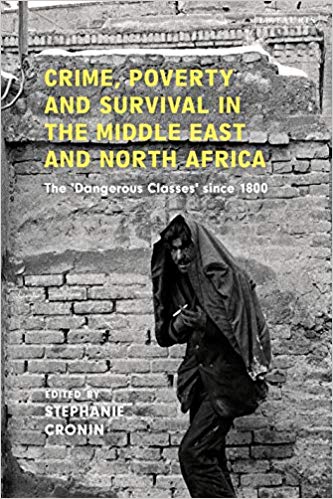
New Book: “Crime, Poverty and Survival in the Middle East and North Africa: The ‘Dangerous Classes’ since 1800,” Edited by Dr. Stephanie Cronin, Elahé Omidyar Mir-Djalali Research Fellow, University of Oxford

Roshan Cultural Heritage Institute congratulates Dr. Stephanie Cronin, Elahé Omidyar Mir-Djalali Research Fellow at Oxford, on being the Editor of the new publication, Crime, Poverty and Survival in the Middle East and North Africa: The ‘Dangerous Classes’ since 1800 (I. B. Tauris, 2019). The book is a collection of papers that were presented at a conference organized by Dr. Cronin at St Antony’s College, Oxford, with funding from Roshan Cultural Heritage Institute.

The concept of the “dangerous classes” was born in mid-nineteenth century Europe. It described all those who had fallen out of the working classes into the lower depths of the new societies, surviving by their wits or various amoral, disreputable or criminal strategies.

Crime, Poverty and Survival in the Middle East and North Africa: The ‘Dangerous Classes’ since 1800 examines the ‘dangerous classes’ in the Middle East and North Africa, their lives and the strategies they used to avoid, evade, cheat, placate or, occasionally, resist, the authorities. Chapters cover the narratives of their lives; their relationship with ‘respectable’ society; their political inclinations and their role in shaping systems and institutions of discipline and control and their representation in literature and in popular culture.

Dr. Cronin is a member of the Faculty of Oriental Studies, University of Oxford where she teaches graduate courses in Modern Middle Eastern Studies, specifically on Iranian history (Qajar and Pahlavi periods) and History from below in the Middle East and North Africa. She is the author of many books on modern Iranian history and is currently working on a social history of modern Iran “from below”.

Find out more about Dr. Stephanie Cronin

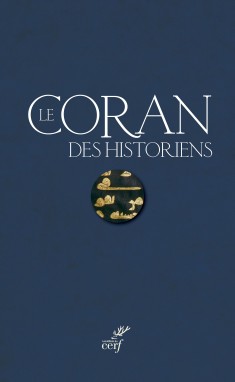
Congratulations to Professor Mohammad Ali Amir-Moezzi on the release of his new book, Le Coran des historiens

Roshan Cultural Heritage Institute wishes to congratulate Professor Mohammad Ali Amir-Moezzi, Directeur d’Etudes at the Ecole Pratique des Hautes Etudes at the Sorbonne, on the release of his new monumental book, Le Coran des historiens (Editions du Cerf, 2019). Made up of three volumes of a thousand pages each, Le Coran des historiens has been acclaimed as a major editorial event and praised for its ambitious aim to make the Qur’an accessible to all.

Edited by Professor Amir-Moezzi and Guillaume Dye, Professor in Islamic Studies at the Université libre de Bruxelles, Le Coran des historiens brings together 30 international specialists, including Professors Amir-Moezzi and Dye, who offer a complete and critical synthesis of past work and present research on the origins of the Qur’an, its formation and appearance, its composition and its canonization. The twenty exhaustive studies in Volume 1, Etudes sur le contexte et la genèse du Coran, introduce the readers to a detailed analysis of the Qur’an and anchor the emergence of Islam in a rich and complex context. Volumes 2a and 2b provide a new analysis, as well as a commentary according to the historical-critical approach, for each of the 114 Suras from the founding book of Islam.

Le Coran des historiens is a complement to Le Dictionnaire du Coran (Robert Laffont, 2007) also edited by Professor Amir-Moezzi; both publications were made possible by a grant from Roshan Cultural Heritage Institute. Professor Amir-Moezzi is the author and/or director of numerous other books and articles on Islam in general and on Shiism in particular, many of which have been translated in English.

Find out more

Congratulations to Professor Matthew Canepa, Recipient of the Top Book Prize from Archaeological Institute of America for his Book, The Iranian Expanse

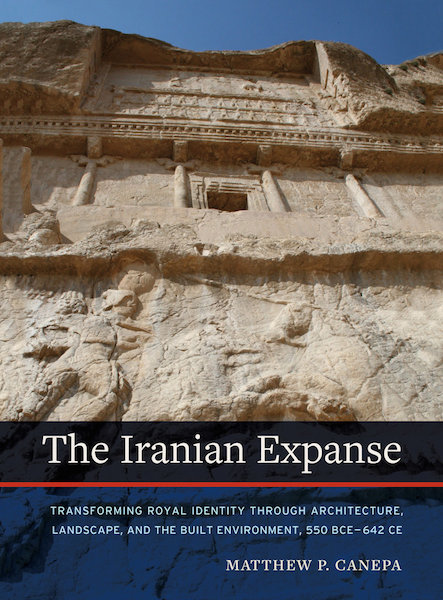
Roshan Cultural Heritage Institute wishes to congratulate Dr. Matthew Canepa, Professor of Art History and Elahé Omidyar Mir-Djalali Presidential Chair in Art History and Archaeology of Ancient Iran at UC Irvine, on receiving the 2020 James R. Wiseman Book Award from Archaeological Institute of America (AIA) for his second book, The Iranian Expanse: Transforming Royal Identity through Architecture, Landscape, and the Built Environment, 550 BCE-642 CE (University of California Press, 2018). The AIA bestows the Wiseman award on the academic work on an archaeological topic that it deems the most worthy of recognition each year. The award will be presented to Professor Canepa in Washington D.C. on January 4, 2020, in a ceremony at the Archaeological Institute of America’s annual meeting.

The Iranian Expanse covers 1,000 years of art, archeology and history of ancient Iran, from the Achaemenid period to the arrival of Islam, and explores how kings in Persia and the ancient Iranian world utilized the built and natural environment to form and contest Iranian cultural memory, royal identity, and sacred cosmologies. This large-scale study critically examines the construction of a new Iranian royal identity and empire, which subsumed and subordinated all previous traditions, including those of Mesopotamia, Egypt, and Anatolia. It then delves into the startling innovations that emerged after Alexander under the Seleucids, Arsacids, Kushans, Sasanians, and the Perso-Macedonian dynasties of Anatolia and the Caucasus, a previously understudied and misunderstood period.

Professor Canepa is an award-winning historian of art, archaeology and religions of Persia and wider Iranian world. His first book, The Two Eyes of the Earth (University of California Press, 2009; paperback edition, 2017,) is a pioneering comprehensive study of the artistic, ritual and ideological interactions between the late Roman and Sasanian empires. It was awarded the 2010 James Henry Breasted Prize from the American Historical Association for best book in English on any field of history prior to the year 1000 CE and the Archaeological Institute of America’s von Bothmer Publication Fund.

Learn more about The Iranian Expanse

Elahé Omidyar Mir-Djalali Symposium on Persian Language and Literature: Re-Reading Hafiz Today, at UC Irvine, December 6, 2019

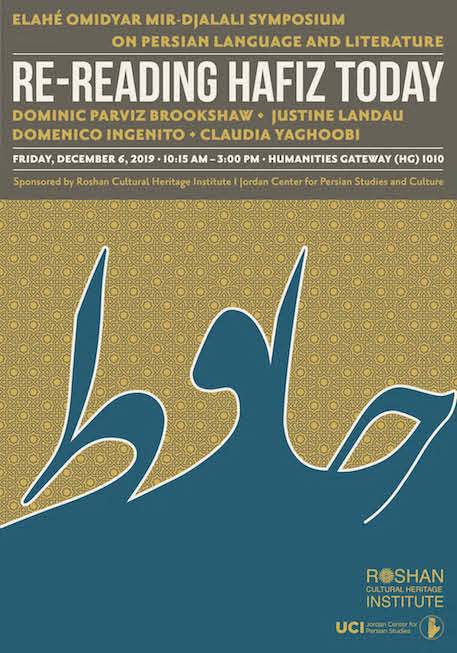
Roshan Cultural Heritage Institute is pleased to announce the Elahé Omidyar Mir-Djalali Symposium on Persian Language and Literature titled “Re-Reading Hafiz Today” that will take place on Friday, December 6, 2019, 10:15 am – 3:00 pm, in UC Irvine’s Humanities Gateway (HG) 1010.

This event is organized by Dr. Nasrin Rahimieh, Howard Baskerville Professor of Comparative Literature at UC Irvine’s School of Humanities. Opening remarks will be made by Professor Touraj Daryaee, Maseeh Chair and Director of the Samuel Jordan Center for Persian Studies and Culture at UC Irvine.

Speakers and topics include: Dominic Parviz Brookshaw (University of Oxford), “Hafiz and the Poetic Landscape of Fourteenth-Century Shiraz”; Justine Landau (Harvard University), “Talmiḥ: the lyric power of invocation”; Domenico Ingenito (University of California, Los Angeles), “The Divan of Hafez as a diachronic map: the geopoetical dimension of the Persian ghazal between the 13th and the 14th centuries”; and Claudia Yaghoobi (Roshan Institute Assistant Professor in Persian Studies, University of North Carolina at Chapel Hill), “Zulaikha’s Displaced Desire in Jami’s Yusuf and Zulaikha”.

This event is free and open to the public. No registration is required.

Find out more about the Symposium

News from the University of Washington

Roshan Cultural Heritage Institute is delighted to share the following news from the Department of Near Eastern Languages and Civilizations (NELC) at the University of Washington.

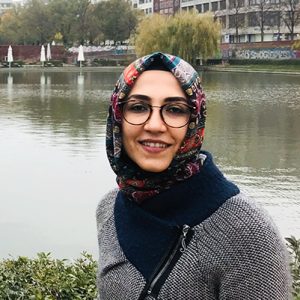
NELC awarded the Roshan Institute Fellowship for Excellence in Persian Studies, for the 2019-2020 academic year, to Melinda Cohoon, a Ph.D. student in the Interdisciplinary Program in Near and Middle Eastern Studies (pictured). Ms. Cohoon’s doctoral research focuses on the cultural production of video games and gamers from Iran. Her study will show how the Iranian gaming community in World of Warcraft (WoW) is embodied, or rather, made tangible in an online context through the use of affect theory and a gender lens. 

NELC also reports that Maral Sahebjame–who received the Roshan Institute Fellowship for Excellence in Persian Studies for 2018-2019–was one of two runner ups for the British Institute for Persian Studies Best Paper Prize at the Symposia Iranica 4th Persian Studies conference, University of St Andrews, April 2019, for her work titled “Marriage as a public affair: What cohabitation unmasks about civil religious hybridity in Iranian law”. As a Ph.D. candidate in the Interdisciplinary Program in Near and Middle Eastern Studies, Ms. Sahebjame is currently completing her dissertation, titled “Marriage Across the ‘Color Spectrum’: Making Commitment Palatable in the Islamic Republic of Iran”.

In addition, in Fall 2019, NELC welcomed Dr. Aria Fani as Assistant Professor of Persian and Iranian Studies–a position that was held by Dr. Samad Alavi until his untimely departure for the University of Oslo. Dr. Fani received his B.A. in Comparative Literature from the San Diego State University and a Ph.D. in Near Eastern Studies from the University of California, Berkeley. His dissertation, titled “Becoming Literature: The Formation of Adabiyat as a Discipline in Iran and Afghanistan (1895-1945),” focuses on the development of literature as an institution as it developed in Iran and Afghanistan in the late nineteenth and twentieth centuries.

Roshan Cultural Heritage Institute congratulates NELC and the Persian and Iranian Studies program for the above great news and wishes all involved a most successful 2019-2020 academic year.

Find out more about NELC at the UW

Dr. Narges Nematollahi appointed as Elahé Omidyar Mir-Djalali Assistant Professor of Persian Language at the University of Arizona

Roshan Cultural Heritage Institute congratulates Dr. Narges Nematollahi on her new appointment as Elahé Omidyar Mir-Djalali Assistant Professor of Persian Language at the University of Arizona, upon completion of her dual Ph.D. in Central Eurasian Studies and Linguistics from Indiana University in August 2019. At the UA, Dr. Nematollahi will continue teaching the four years of Persian language courses that she has been teaching since Fall 2018, in the School of Middle Eastern and North African Studies, while finishing her doctoral dissertation entitled “The Iranian Epistolary Tradition: Origins and Developments (6th century BCE to 7th century CE).”

Dr. Nematollahi’s research is focused on the epistolary tradition in pre-Islamic Iran, composed in Aramaic, Parthian and Middle Persian languages, and how it is transformed in the early medieval Iran, under the influence of Arabic. Her broader areas of research are stylistics of Old-, Middle- and Modern Persian, historical linguistics and formal linguistics of Iranian languages. She also holds a Master’s degree in Ancient Languages and Cultures from Tehran University, Iran, and a Master’s degree in Religion Studies, focused on Zoroastrianism, from the School of Oriental and African Studies, University of London, UK.

In addition to teaching Persian language courses at all levels, Dr. Nematollahi will greatly contribute to the activities and programs of the Roshan Graduate Interdisciplinary Program in Persian and Iranian Studies (“Roshan GIDP”) at the UA’s Graduate College. Directed by Professor Kamran Talattof, Elahé Omidyar Mir-Djalali Chair in Persian and Iranian Studies, the Roshan GIDP offers M.A., Ph.D., and Minor degrees focusing on modern or classical Persian literature, Iranian (or other Persian speaking societies’) culture, history, religion, social organization, and politics.

Both the Elahé Omidyar Mir-Djalali Professorship of Persian Language and the Roshan GIDP have been established with significant endowments provided to the UA by Roshan Cultural Heritage Institute.

Read more about the Roshan GIDP

New Elahé Omidyar Mir-Djalali Postdoctoral Fellow in Iranian Linguistics at the University of Toronto

Roshan Cultural Heritage Institute is pleased to welcome Dr. Songül Gündoğdu as the new Elahé Omidyar Mir-Djalali Postdoctoral Fellow in Iranian Linguistics, in support of the “Syntax of Nominal Linkers” project led by Dr. Arsalan Kahnemuyipour, Associate Professor of Linguistics, at the University of Toronto.

Dr. Songül Gündoğdu received her M.A. and Ph.D. in Linguistics from the Department of Linguistics at Boğaziçi University in Turkey. Her main areas of research interest are morphosyntactic aspects of Iranian languages, such as the Persian Ezafe, which links the noun with its modifiers in an iterative manner. She is a native speaker of Kurmanji (Northern Kurdish) and Turkish, and has conducted joint research on the comparative analysis of linking markers between these languages.

Dr. Gündoğdu joined Professor Kahnemuyipour in September 2019, for a two-year term, to work on the first phase of his five-year project, which aims to investigate the syntax of nominal linkers across languages. Starting with the better-studied Persian case known as the Ezafe, in its first stage, the project takes on a systematic comparative investigation of several Iranian languages to establish the properties nominal linkers in each of these languages possess. The project team is currently compiling data on several Iranian languages–Kurmanji, Zazaki, Gilaki, Sorani Kurdish and Ossetian–to provide a cross-classification of nominal linkers based on a detailed study of their properties in these languages.

Read more about the Syntax of Nominal Linkers project

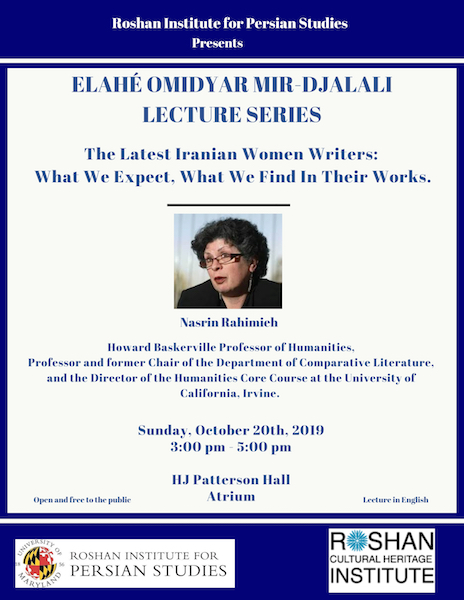
Lecture on Iranian Women Writers by UC Irvine Professor Nasrin Rahimieh, as part of the Elahé Omidyar Mir-Djalali Lecture Series at UMD, October 20, 2019

Roshan Cultural Heritage Institute is pleased to announce that the Roshan Institute for Persian Studies at the University of Maryland, College Park, will present a lecture by Dr. Nasrin Rahimieh, as part of its Elahé Omidyar Mir-Djalali Lecture Series for the academic year 2019-2020. The talk entitled “The Latest Iranian Women Writers: What We Expect, What We Find in Their Works” will take place on October 20, on campus.

Dr. Nasrin Rahimieh is Howard Baskerville Professor of Humanities, Professor and former Chair of the Department of Comparative Literature, and the Director of the Humanities Core Course at the University of California, Irvine. Her teaching and research are focused on modern Persian literature, the literature of Iranian exile and diaspora, contemporary Iranian women’s writing. Among her publications are Missing Persians: Discovering Voices in Iranian Cultural History (Syracuse University Press, 2001,) Forugh Farrokhzad, Poet of Modern Iran: Iconic Woman and Feminine Pioneer of New Persian Poetry co-edited with Dominic Parviz Brookshaw (I B Tauris, 2010) and Iranian Culture: Representation and Identity (Routledge, 2016).

The lecture is in English and is open and free to the public.

Sunday, October 20, 2019 | 3:00 p.m. – 5:00 p.m. | HJ Patterson Hall Atrium | University of Maryland, College Park

Find out more about the event